DHCP, DNS, NTP, and RADIUS
Checks for a client wireless network, AP management network, site, user context, or SSID context.
 MeilleurControl
Integrations and handoff
Control structures scope, status, technical evidence, and root-cause context so APIs and reports can reuse them. ITSM handoff is kept clearly separate from an actually enabled remote-delivery path.
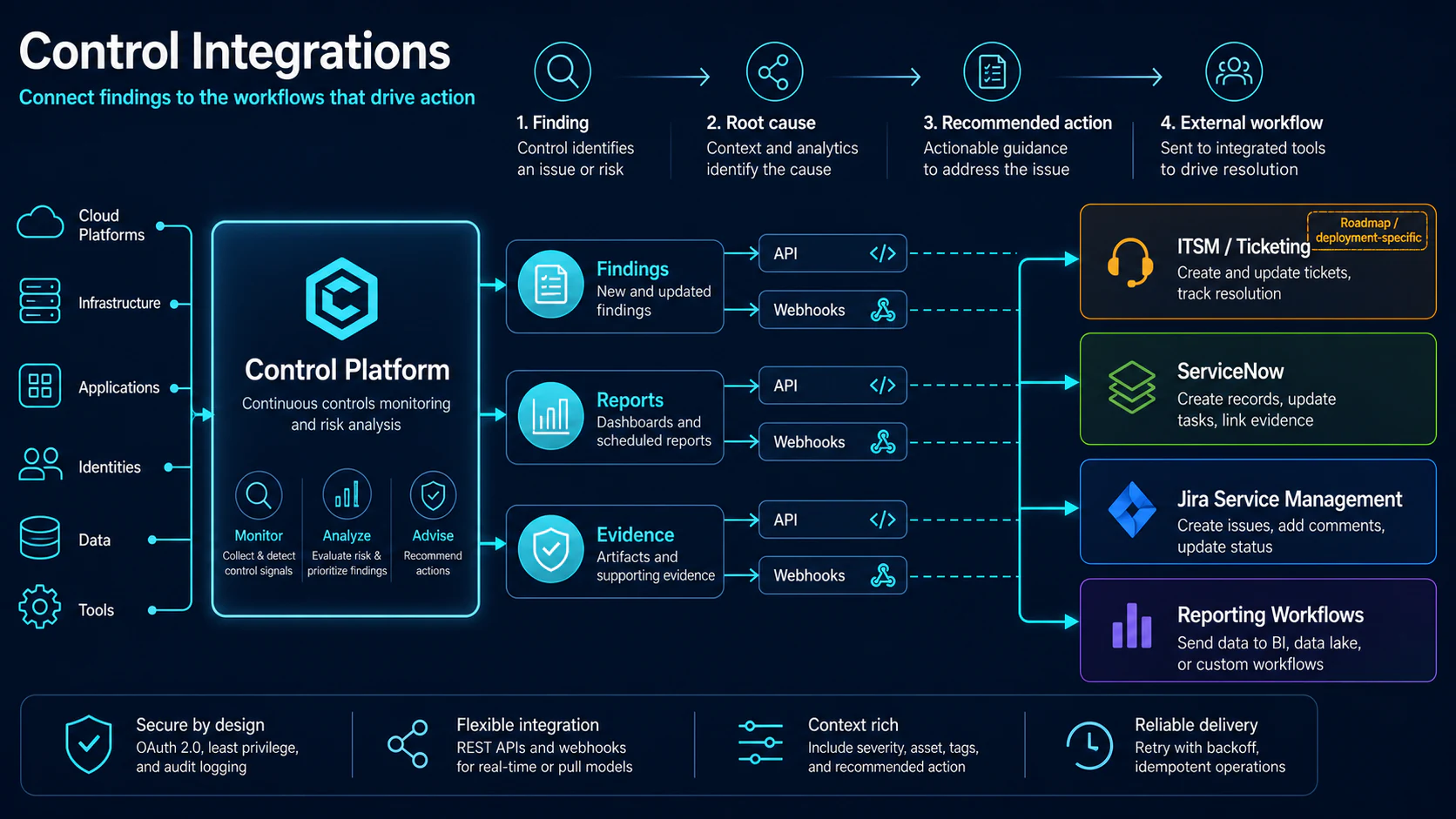
API and structured results
The API can trigger checks for a defined scope and return machine-readable results.
Checks for a client wireless network, AP management network, site, user context, or SSID context.
Validate every AP in a building or individual Ethernet interfaces and switch ports.
Site Engine onboarding, policy context, cloud communication, and the effects of firewall rules or SSL inspection.
Structured finding
ITSM foundation
The ServiceNow outbox prepares incident candidates locally with an auditable record. Automatic remote incident creation or updates are not currently available as a production feature, so other ITSM targets are not presented as finished integrations.
Prepared ITSM flow