Mobile validation node
A compact node for on-site acceptance, SSID/BSSID checks, roaming walks and targeted service validation.
 MeilleurControl
A centrally orchestrated platform for real Wi-Fi associations, programmable client identities and defensible traffic scenarios – from one mobile test node to a distributed lab fleet.
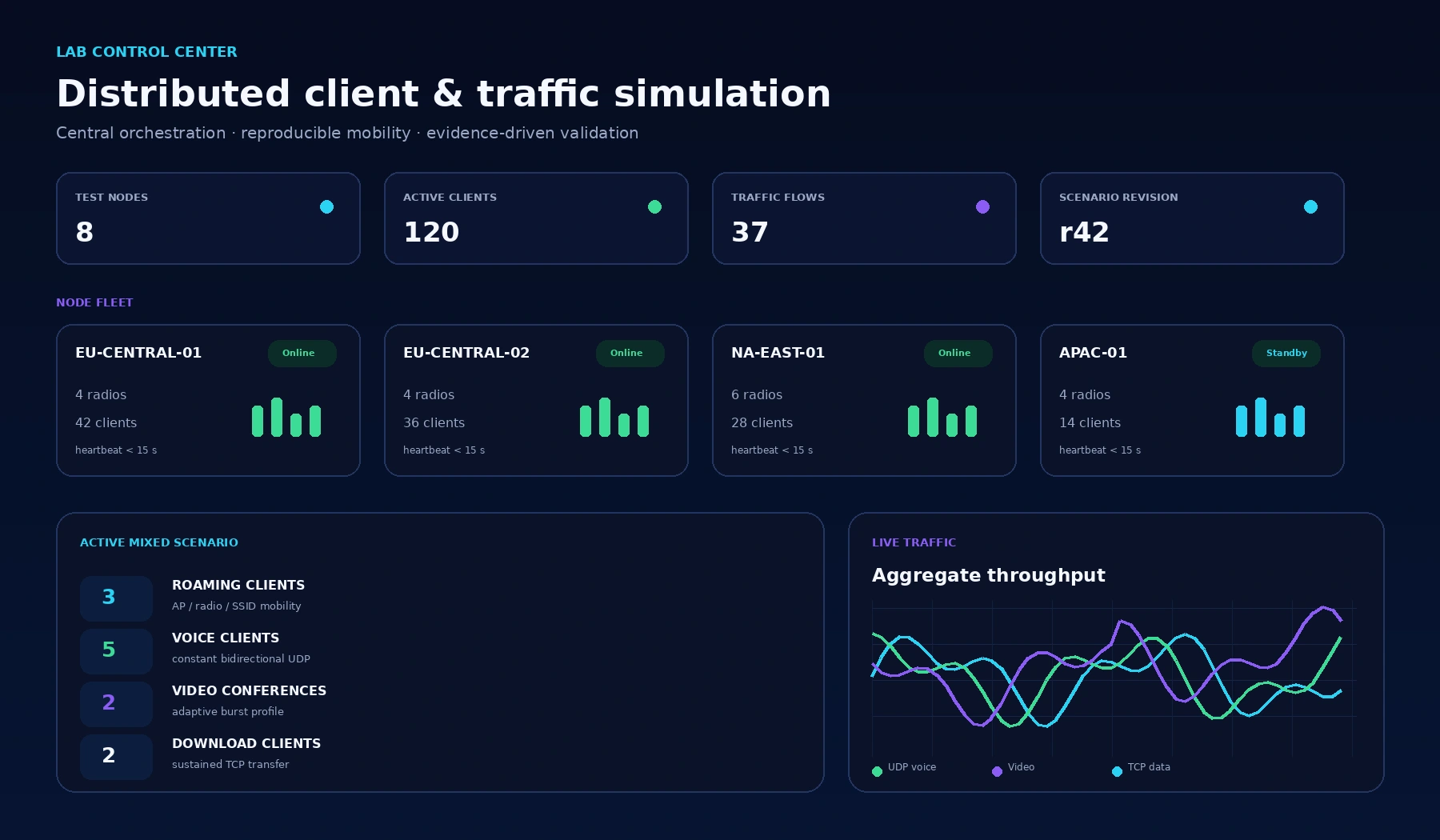
Nodes can be used as mobile tools, room-level test systems or a multi-site fleet. One control center distributes profiles, starts scenarios and correlates results in a shared client and time context.
A compact node for on-site acceptance, SSID/BSSID checks, roaming walks and targeted service validation.
Multiple nodes per lecture hall, auditorium, floor or RF zone create defined client and traffic distributions.
Deploy the same scenario to multiple sites, start it at the same time and compare results centrally.
These are repeatable planning and acceptance scenarios. Acceptance limits remain project-specific – the lab provides the measurements rather than a generic pass/fail result.
Onboarding, DHCP, DNS, RADIUS, concurrent application starts and distribution across 2.4/5/6 GHz where supported by the test hardware.
Staged admission, lease and pool demand, capacity, retry behaviour and net throughput with a high concurrent client count.
Bidirectional RTP profiles with measurable latency, jitter and packet loss, including AP hopping and roaming under load.
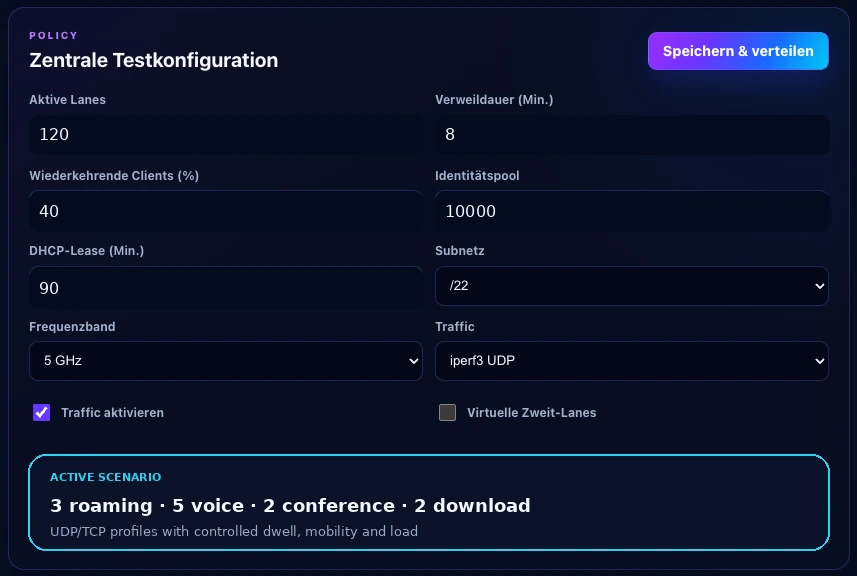
For example, three continuously roaming clients, five voice calls, two video sessions, two internet downloads and additional office traffic.
Every value is evaluated per run, node, client, radio and time window. Design decisions, acceptance tests and optimisations remain traceable.
Round trip and one-way where the clock source and measurement path allow it.
Packet-spacing variation for voice and real-time profiles.
Sent, received and lost packets, separated by direction and profile.
Retransmissions as an RF and airtime indicator per client and radio.
Usable Mbps/Gbps rather than nominal PHY rate.
Utilisation, load shares and bottlenecks per radio cell.
Clients and load across 2.4/5/6 GHz, AP, BSSID and radio.
Timestamp, interruption and target path during controlled mobility.
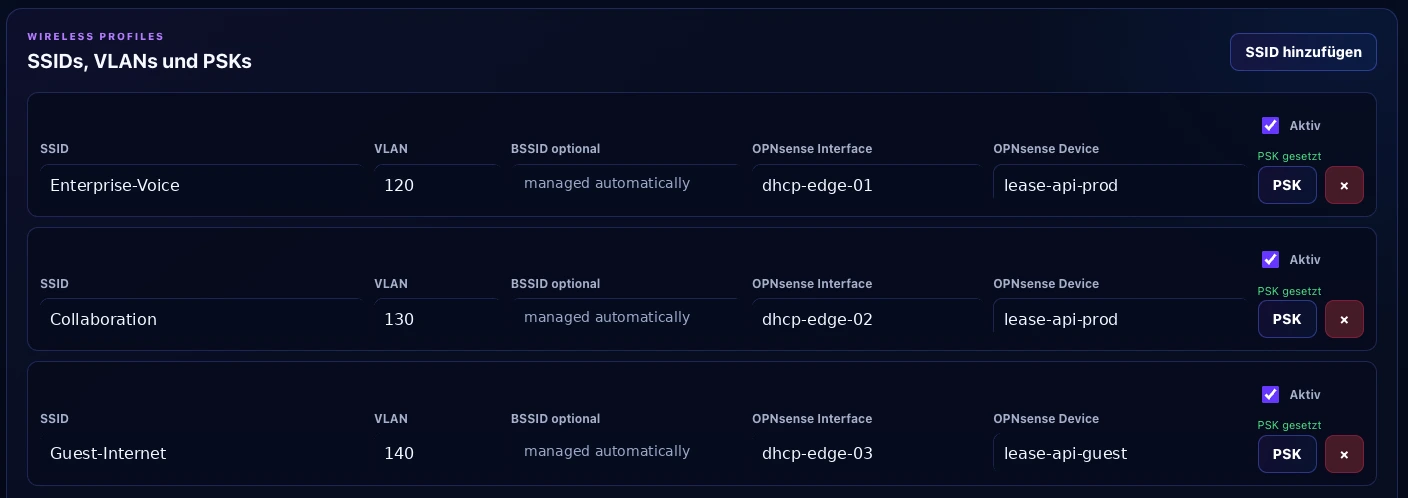
The control center manages SSIDs, optional BSSID targets, identity pools, dwell times, bands and traffic profiles. DHCP integrations can remove test leases in a controlled way and calculate pool and lease demand for each scenario.
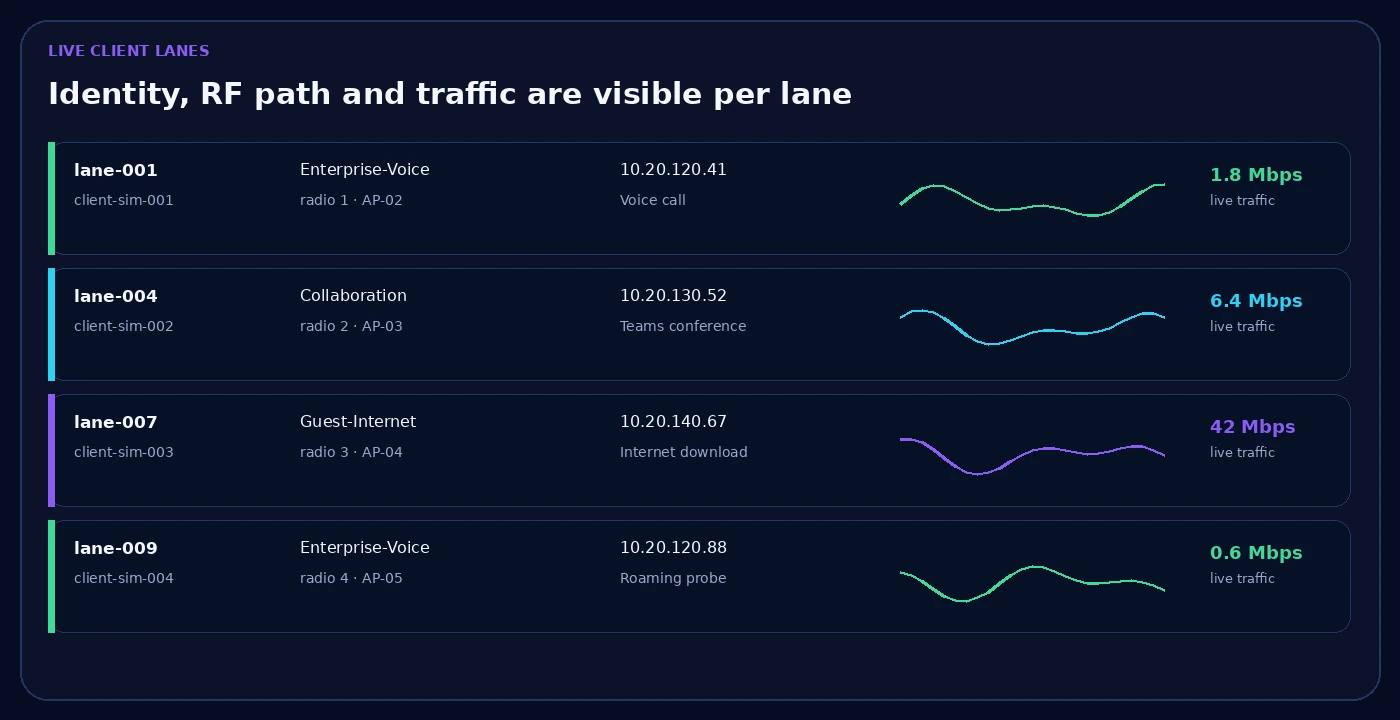
Client lane, identity, association, AP/BSSID changes, radio, traffic and service results stay in one timeline. This reveals whether the root cause is RF, roaming, DHCP, policy or load.
Run the same scenario again, compare changes and provide defensible technical evidence for planning, acceptance, troubleshooting and go-live.