Healthy globally, unresolvable locally
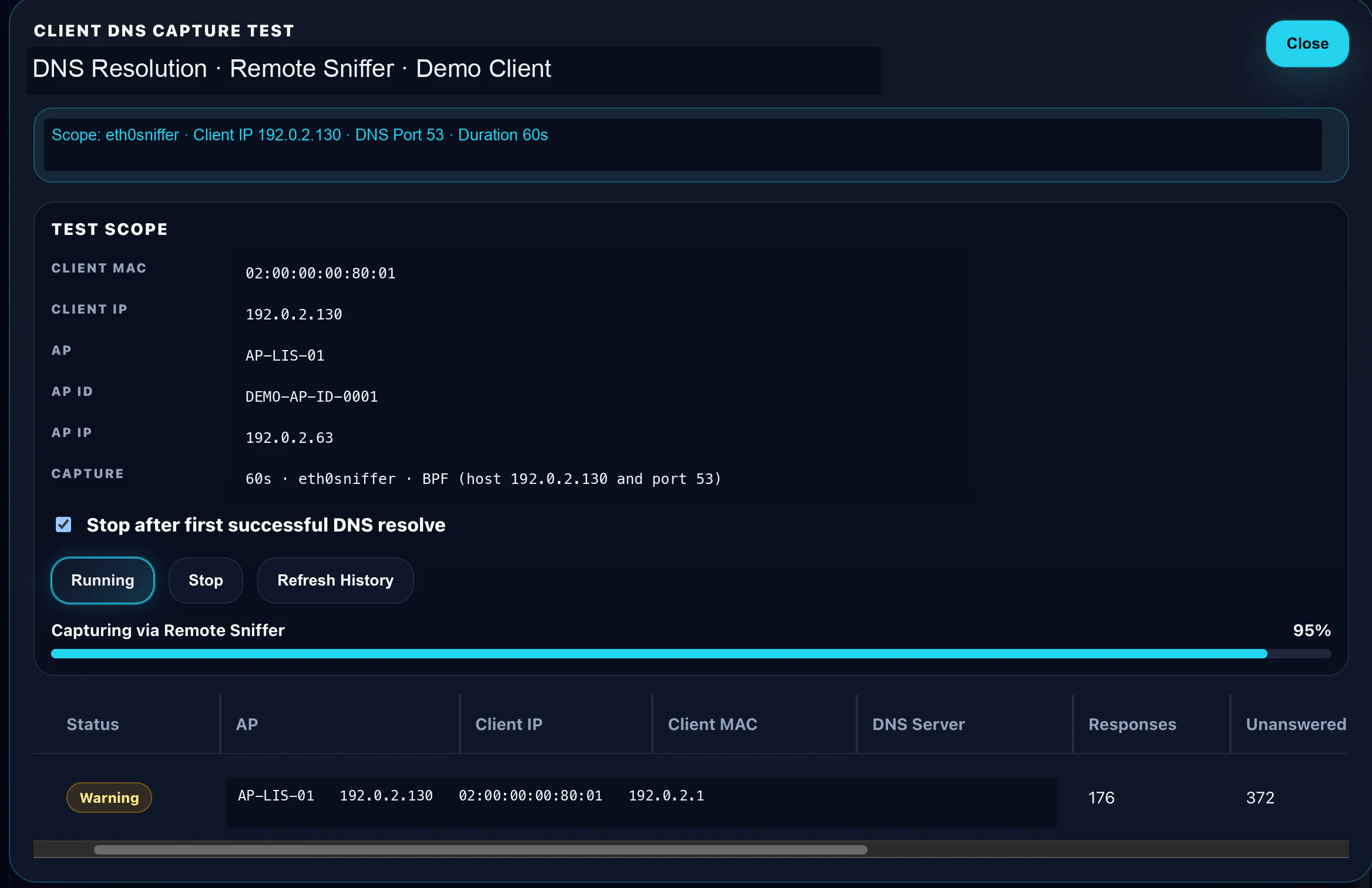
A specific RADIUS, NTP, or cloud hostname cannot be resolved through the resolver at one site. Control shows the resolver, target, response, runtime, and affected scope.
 MeilleurControl
Diagnostics Engine
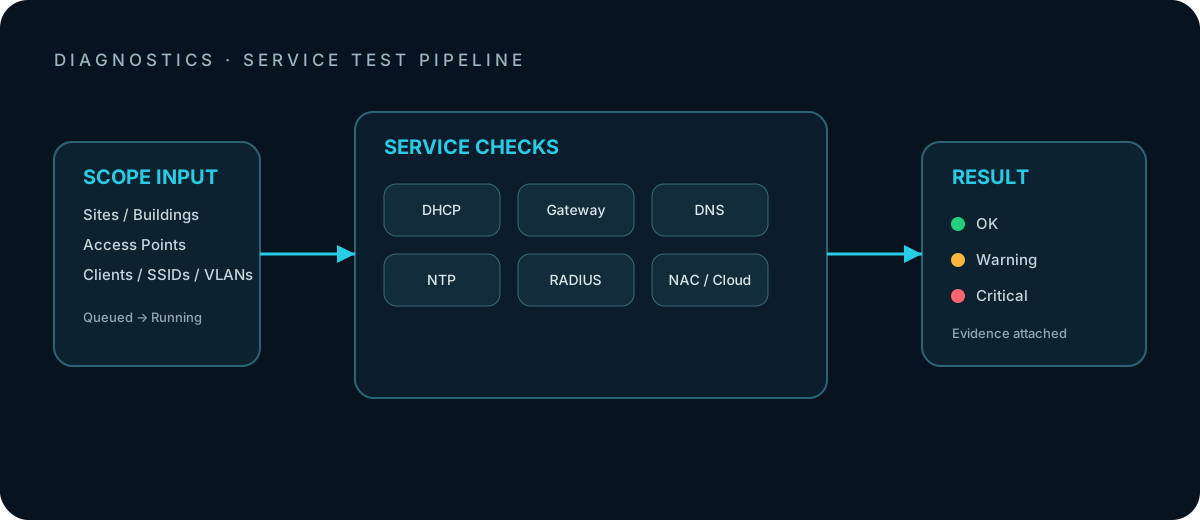
A central ping or a green DNS status is not enough for a defensible diagnosis. What matters is whether the service works where clients and access points actually need it. Control runs targeted checks for APs, sites, SSIDs, or VLANs and connects the result with technical evidence.
The scope matters
A specific RADIUS, NTP, or cloud hostname cannot be resolved through the resolver at one site. Control shows the resolver, target, response, runtime, and affected scope.
A lease is issued, but far too late. DHCP relay, VLAN, packet loss, switch-port, or link issues become visible as potential infrastructure context.
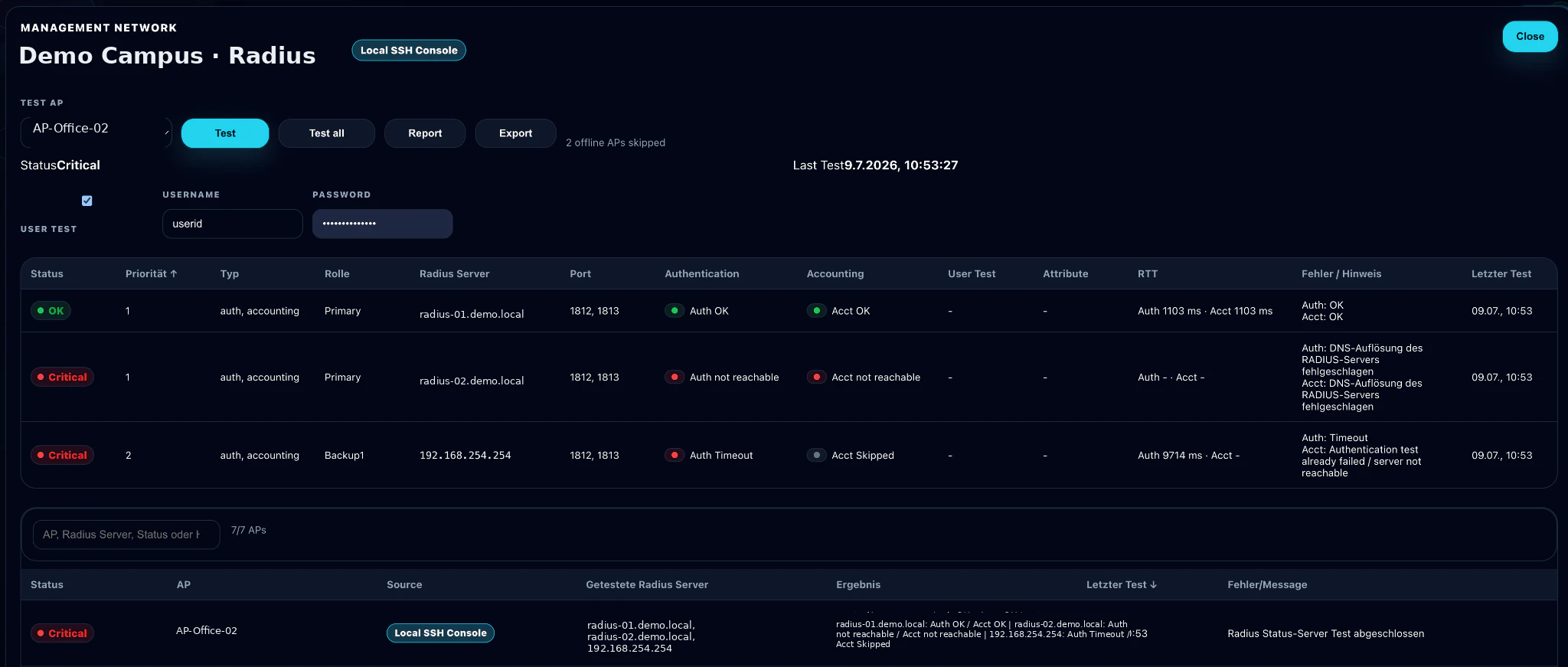
Control validates the server, role, port, authentication, accounting, RTT, DNS resolution, and the exact error returned.
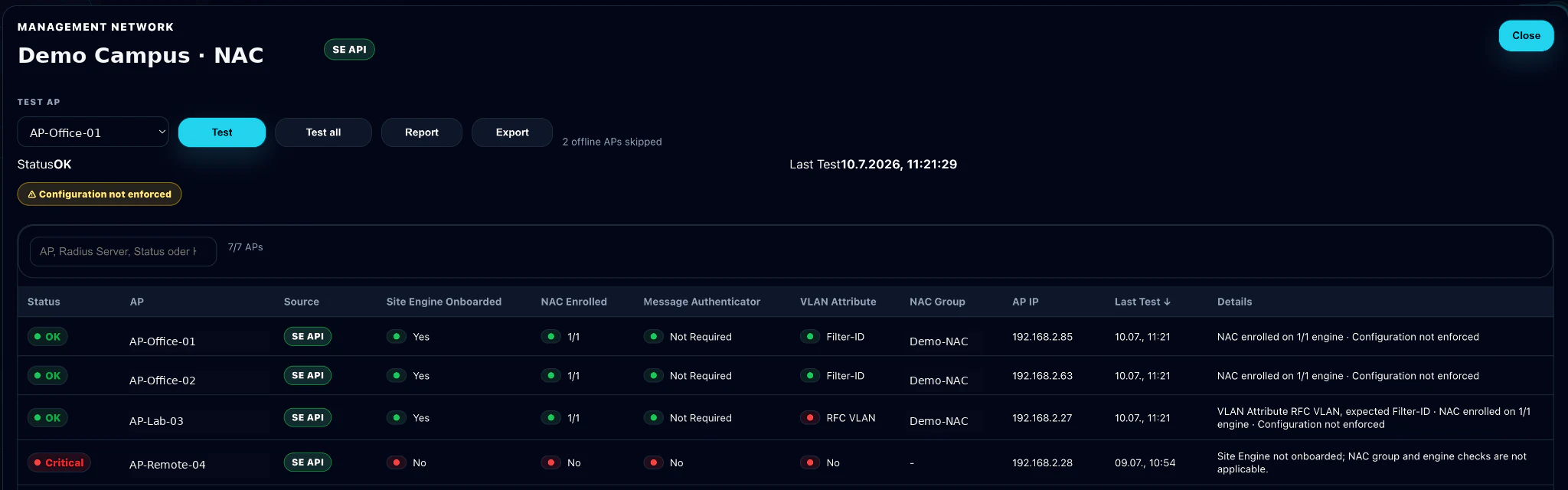
An AP can be reachable yet still belong to the wrong NAC group context, remain unonboarded, or receive an unexpected VLAN attribute.
Internet connectivity works, but certificate manipulation or firewall rules prevent cloud communication and the onboarding of new access points.
Service matrix
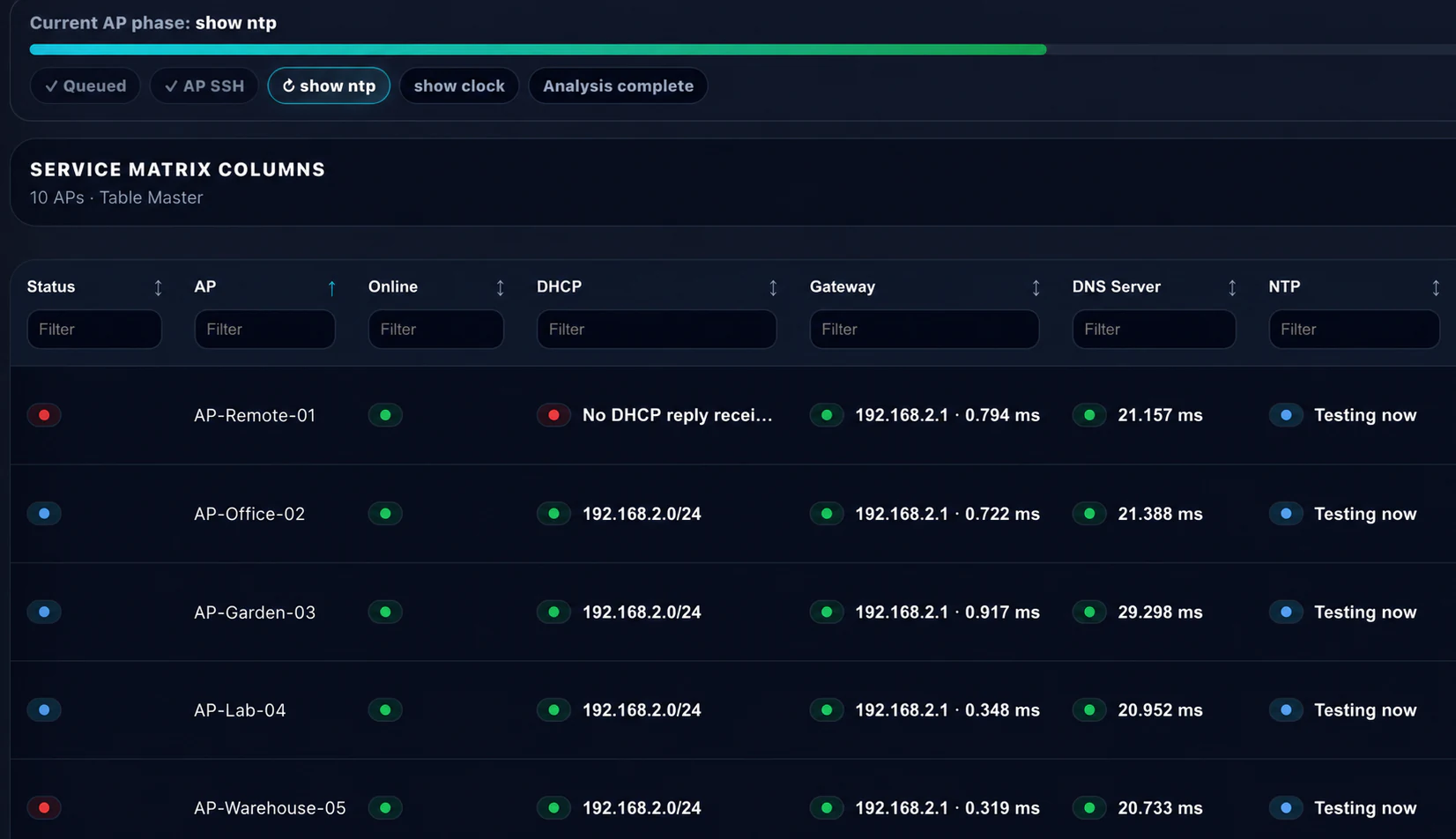
The Service Matrix shows queue state, current phase, runtime, and result for each access point. Site-level differences become visible without investigating every AP individually.
Infrastructure correlation
A damaged uplink can cause CRC errors, drops, slow DHCP leases, and unstable sessions at the same time. If you only look at the DHCP failure, you can end up troubleshooting the wrong system. Control puts service results next to AP, switch-port, and link evidence.
Packet evidence
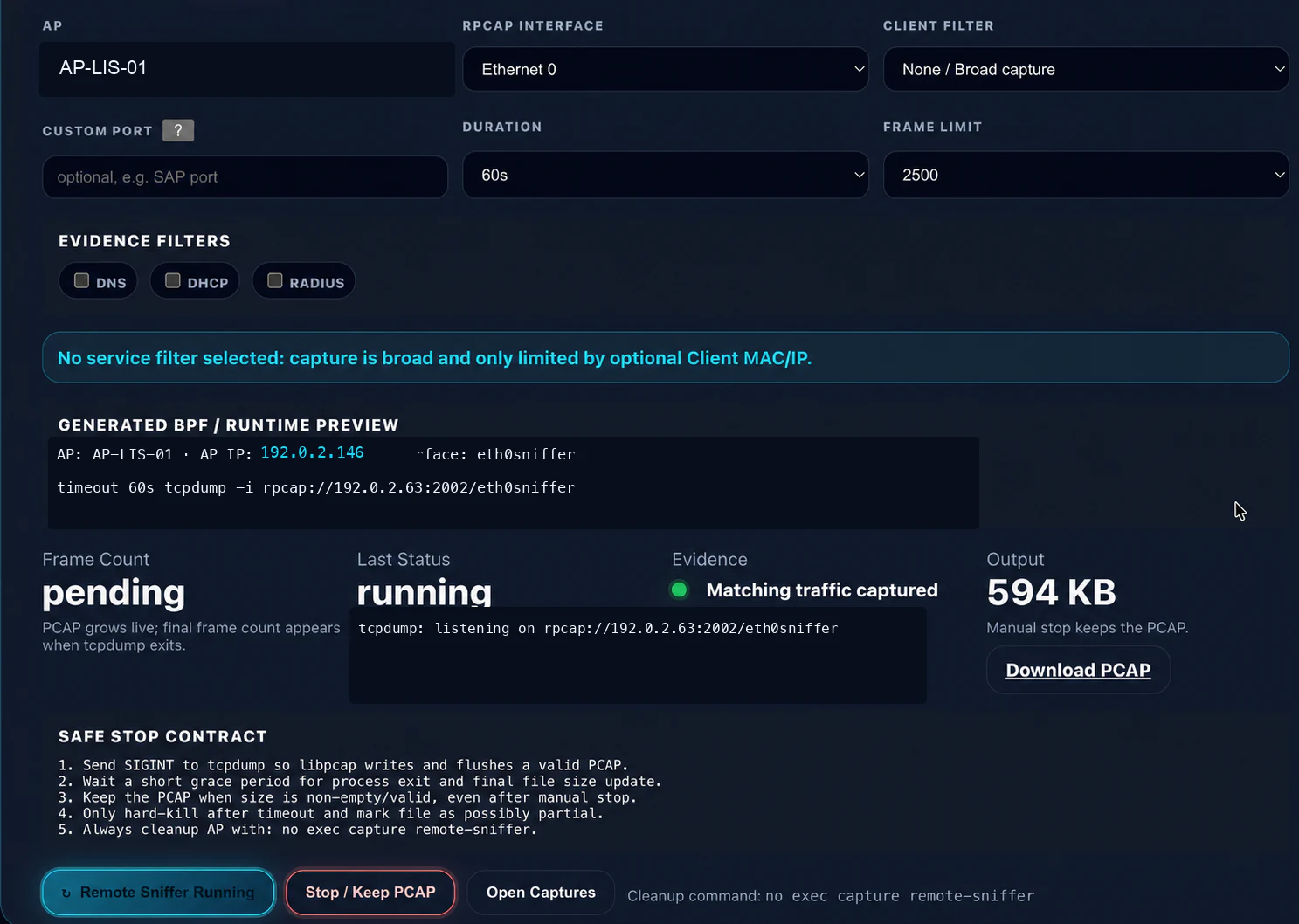
Remote Sniffer and RPCAP enable targeted captures with client, DNS, DHCP, or RADIUS filters. Scope, BPF preview, frame limit, runtime, safe stop, and PCAP download remain controlled and traceable.
Result
Every check returns scope, executed steps, runtime, status, technical evidence, affected infrastructure, and a precise error message. The result can be documented directly or processed in a structured form.